Politics
As Trump Vows to Eliminate Mail-In Voting, Illinois Elections Officials Say Fraud is ‘Extremely Rare’
Video: Joining “Chicago Tonight” are Betty Magness, a vice president at the League of Women Voters of Chicago; Ryan Tolley, executive director at CHANGE Illinois; and Venu Gupta, interim executive director at the Chicago Lawyers’ Committee for Civil Rights. (Produced by Bridgette Adu-Wadier)
The Illinois State Board of Elections says it has numerous security checks in place to ensure the validity of its mail-in ballots and that voter fraud remains “extremely rare,” as President Donald Trump vows to eliminate voting by mail before the 2026 midterm elections.
Relying on false information and conspiracy theories that he’s regularly used to explain his 2020 election loss, Trump pledged on his social media site that he would do away with both mail voting — which remains popular and is used by about one-third of all voters — and voting machines — some form of which are used in almost all of the country’s thousands of election jurisdictions.
How It Works
In Illinois, there are numerous security checks in place to ensure the accuracy and security of mail-in voting, according to Matt Dietrich, a spokesperson for the state’s Board of Elections.
“This is something that election authorities — from the county level on up — we have worked on, ensuring that the public has trust in the integrity of the election system,” he said, “from the moment you register to the moment you’ve cast your ballot until all the results are in.”
Illinois voters who request a mail-in ballot must first sign an application form, which election officials compare to the one on file with their voter registration. If they don’t match, the voter will be asked to submit a new signature or otherwise confirm their identity.
The ballots themselves contain a barcode that’s specific to each individual voter and are mailed out alongside a security envelope used to return the completed ballot. Voters must also sign that envelope, and that signature is again compared to the voter’s signature on record.
If that envelope isn’t properly sealed or the signatures don’t match, election authorities have 48 hours to contact the voter to rectify the problem, according to Dietrich. If the envelope appears to have been tampered with or has other issues, election authorities may “spoil” that ballot and send out a replacement one to the voter.
Once the voter’s signature is verified and the envelope successfully returned, an election judge will remove the ballot and feed it into a tabulator. The envelope’s barcode will also be scanned and the election authority’s system will mark that person as having voted.
If that voter then attempts to go and cast a ballot in person, election judges will see they’ve already voted by mail and will not issue them a new ballot, Dietrich said. For those who have received a mail-in ballot, but instead wish to vote in-person, they will be required to sign an affidavit indicating they no longer want to vote by mail and that mail-in ballot will be voided.
Vote-by-mail remains popular throughout the U.S. and is used by about one-third of all voters. In Illinois, about 19% of votes from the 2024 general election last fall were cast by mail.
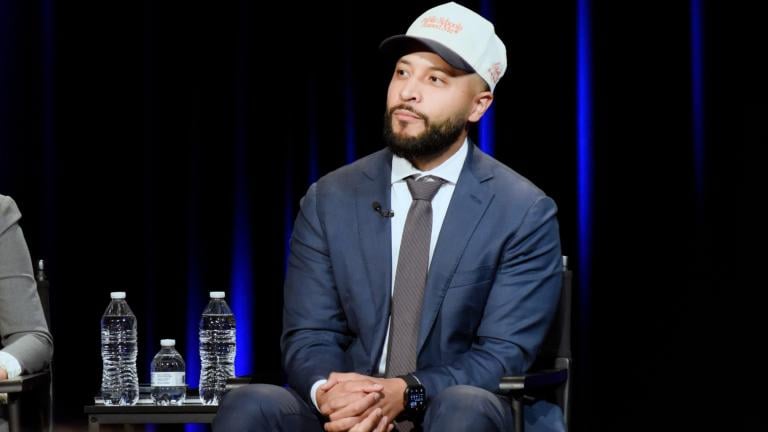
Betty Magness, vice president for issues and advocacy at the League of Women Voters of Chicago, said people with disabilities and elderly voters rely on mail-in ballots.
“Mail-in ballots allow senior citizens to not have to worry about whether they can get transportation on Election Day and/or before the early voting period,” Magness said. “There’s a necessary need for us to be able to do mail-in ballots. It’s very secure. No one is taking your ballot. No one sees your ballot.”
While that was a drop off compared to the 2020 election when mail-in votes accounted for a third of all voting in the state during the COVID-19 pandemic, Dietrich said mail-in voting has steadily increased over the years.
“A lot of voters have decided that’s the method they prefer,” he said.
Trump and Elections
Trump’s post came after the president told Fox News that Russian President Vladimir Putin, in their Friday meeting in Alaska, echoed his grievances about mail voting and the 2020 election.
The announcement signals yet another way that Trump intends to stack the cards in his favor in the 2026 midterm elections, after he already has directed his attorney general to investigate a Democratic fundraising platform and urged states to redraw their congressional districts to help the GOP maintain its majority in the House of Representatives.
Venu Gupta, interim executive director for the Chicago Lawyers’ Committee for Civil Rights, said such a move could have the potential to disenfranchise many groups of people regardless of political status.
“The sudden attention on banning mail-in votes is part of a broader effort to influence the outcome of the midterm elections,” Gupta said. “It really is an effort to take away the right for eligible voters to elect the candidates of their choice irrespective of party affiliation.”
Trump for years has promoted false information about voting.
He claimed there is “MASSIVE FRAUD” due to mail voting, when in fact voting fraud in the U.S. is rare. As an example, an Associated Press review after the 2020 election found fewer than 475 cases of potential fraud in the six battleground states where he disputed his loss, far too few to tip that election to Trump.
Ryan Tolley, executive director at CHANGE Illinois, said the president’s false claims about the election could have the potential to depress voter turnout if people don’t feel confident in the system.
“Where I am concerned is that folks will see this and think they don’t have the ability to vote by mail,” Tolley said. “Therefore they either have to call off work to get to a polling place on Election Day or they just don’t participate because they don’t think they have the time or have a hundred other things going on in their lives.”
Voter fraud in Illinois — by mail-in voting or otherwise — is “extremely rare,” Dietrich said. Five people faced charges in DuPage County following the 2020 election, but certified instances of fraud remain few and far between.
“We don’t hear about it very often,” Dietrich said.
When asked about Trump’s pledge to do away with voting machines, Dietrich said that “isn’t even something we’ve ever considered.”
Washington and Oregon, which conduct elections entirely by mail, have sued to challenge Trump’s earlier executive order — which sought to require that all ballots must be received by Election Day and not just postmarked by then. The states argue that the president has no such authority, and they are seeking a declaration from a federal judge in Seattle that their postmark deadlines do not conflict with federal law setting the date of U.S. elections.
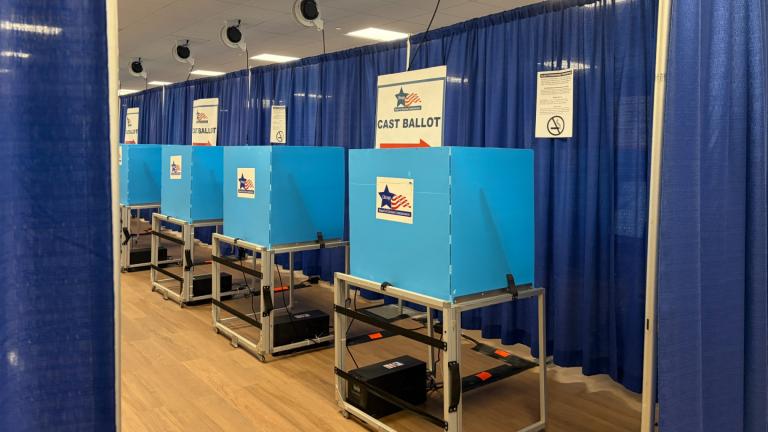
While some jurisdictions still have voters use electronic ballot-marking devices to cast their votes, the vast majority of voters in the U.S. already vote on paper ballots, creating an auditable record of votes that provides an extra safeguard for election security.
The Constitution makes the states the entities that determine the “time, place and manner” of elections, but does allow Congress to “make” or “alter” rules for federal elections.
Congress can change the way states run congressional and presidential elections but has no say in the way a state runs its own elections. The president is not mentioned at all in the Constitution’s list of entities with powers over elections.
“The president has very limited to zero authority over things related to the conduct of elections,” said Rick Hasen, an election law professor at the University of California, Los Angeles.
Bridgette Adu-Wadier contributed to this report.